Modern electronics assembly relies on adhesive tapes more than most people realize. From securing display modules and batteries to mounting thermal interface materials and EMI shielding, double sided tape provides structural support, electrical insulation, and thermal management—all without the mess, clamping time, or heat of liquid adhesives.
Why Adhesive Selection Matters in Electronics Manufacturing
Choosing the wrong tape for your assembly process does not just cause cosmetic defects. It can lead to field failures, warranty returns, and costly rework. That is why procurement and process engineers need to understand the key selection criteria before specifying a tape.
Key Performance Criteria for Electronics Tapes
- Bond strength (peel and shear) – Measured in oz/in (peel) and psi (shear). Higher bond strength is not always better—excessive bond can make disassembly and rework impossible.
- Temperature resistance – Confirm the tape is continuous-use and peak-temperature ratings exceed your worst-case scenario.
- Dielectric strength – For applications near exposed circuits, electrical insulation (typically 500–1,000 V/mil) is a hard requirement.
- Thickness tolerance – Foam tapes (30–60 mil) compensate for mismatched tolerances but add weight.
- Removability – Serviceable devices often require low-modulus tapes that allow clean separation.
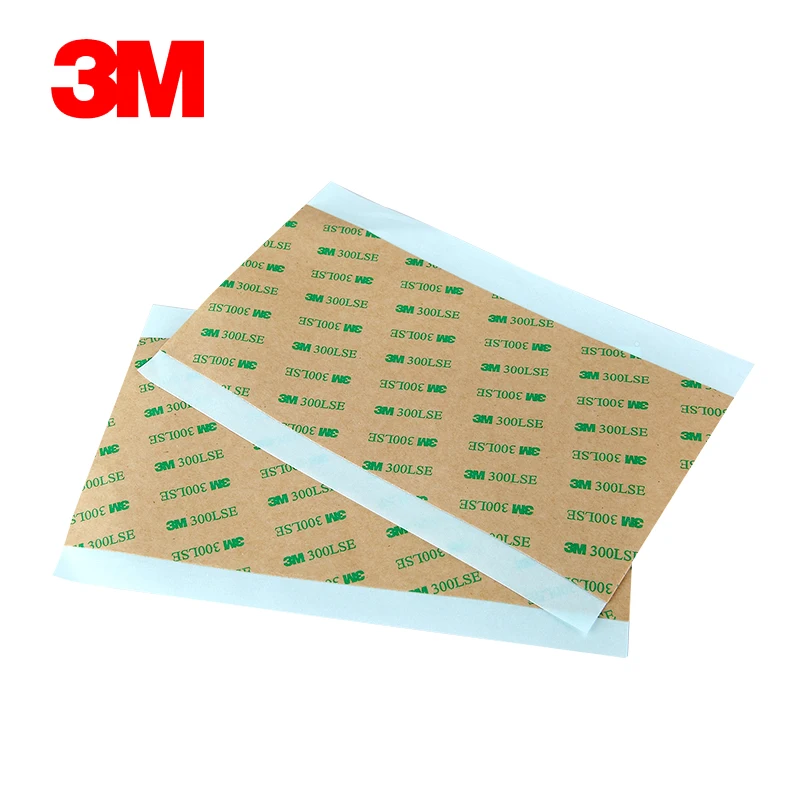
3M 300LSE Products for Electronics Manufacturing


Matching Tape Type to Your Assembly Application
- Display and lens bonding – 3M 300LSE is a common choice for its exceptional adhesion to low-surface-energy plastics like ABS and PC.
- Battery mounting – VHB foam tapes absorb vibration and maintain compression over thermal expansion cycles.
- Thermal interface bonding – Some thermal tapes include ceramic or metal oxide fillers for heat dissipation.
- EMI/RFI shielding – Conductive adhesive tapes bond metal EMI shields while maintaining electrical continuity.
Substrate Considerations
- ABS, PC, PMMA (plastics) – Low-to-medium surface energy. Acrylic adhesives bond well.
- Aluminum and bare metals – Medium-high surface energy. Most acrylic tapes perform reliably.
- Powder-coated surfaces – Require VHB tapes with surface-modifying primers.
- FPC (flexible circuits) – Requires ultra-thin tapes with silicone-free adhesive.
Frequently Asked Questions
What is the best double sided tape for bonding plastic enclosures in electronics?
3M 300LSE is widely used for plastic-to-plastic bonding in electronics because its modified acrylic adhesive adheres well to low-surface-energy plastics like ABS and PC. For high-vibration environments, 3M VHB foam tape provides better shock absorption.
Can double sided tape be used near active electrical circuits?
Yes, but you must verify the tape is dielectric strength and electrical resistivity. Non-conductive acrylic foam tapes are commonly used near exposed circuits.
How do I remove double sided tape residue from electronic components during rework?
Apply isopropyl alcohol or a dedicated adhesive remover and let it penetrate for 30–60 seconds before gently peeling. Avoid metal scrapers on PCB surfaces.
What thickness tape should I use for filling gaps between mismatched parts?
For gaps under 0.020 inches (0.5 mm), a thin acrylic adhesive tape (5–10 mil) can work if the bond line is compressed. For larger gaps, a foam VHB tape of 30–60 mil is better suited.
Need help selecting the right tape for your electronics assembly? Contact AdhesiveHub.com for free technical consultation and sample kits.